

You’ve typed “website designer near me” into Google.
Maybe you got a page of directories, a few agency results, and a freelancer or two. Maybe you clicked through a few sites and none of them felt quite right. Maybe you’ve been here before — you hired someone, it didn’t go the way you expected, and now you’re more cautious about the whole thing.
This post is going to help you figure out what to actually look for, beyond the Google results, beyond the portfolio galleries, and beyond the price quotes.
Because the difference between a website experience that works and one that doesn’t usually has nothing to do with which city your designer is in.

Does your website designer actually need to be near you?
The short answer is no, and the longer answer is also mostly no.
The best website designers for your specific business might be in your city. Or they might be three provinces away. Location is rarely the most important variable.
What actually matters is whether the designer understands your type of business, has built websites that convert for service-based businesses like yours, communicates clearly and consistently, and will still be responsive six months after your site launches.
That said, there are real reasons some business owners prefer working with someone local. You might want the option of a face-to-face meeting. You might want to support businesses in your community. You might feel more confident working with someone who understands your local market.
All of those are valid. But if you’re searching “website designer near me” and limiting yourself to people within driving distance, you might be filtering out the designer who is actually the best fit for your business.
The better search is “website designer who works with businesses like mine”, and that search is what this post will help you do.
What to actually look for in a website designer
1. A portfolio that includes businesses like yours
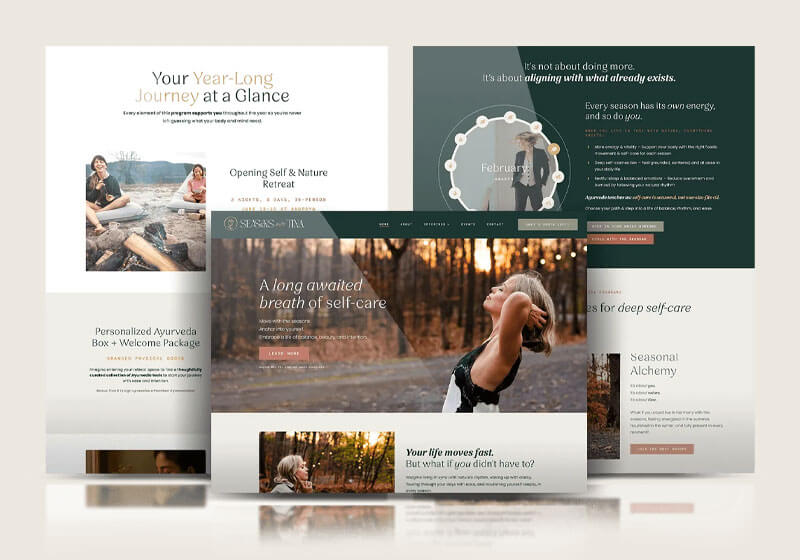
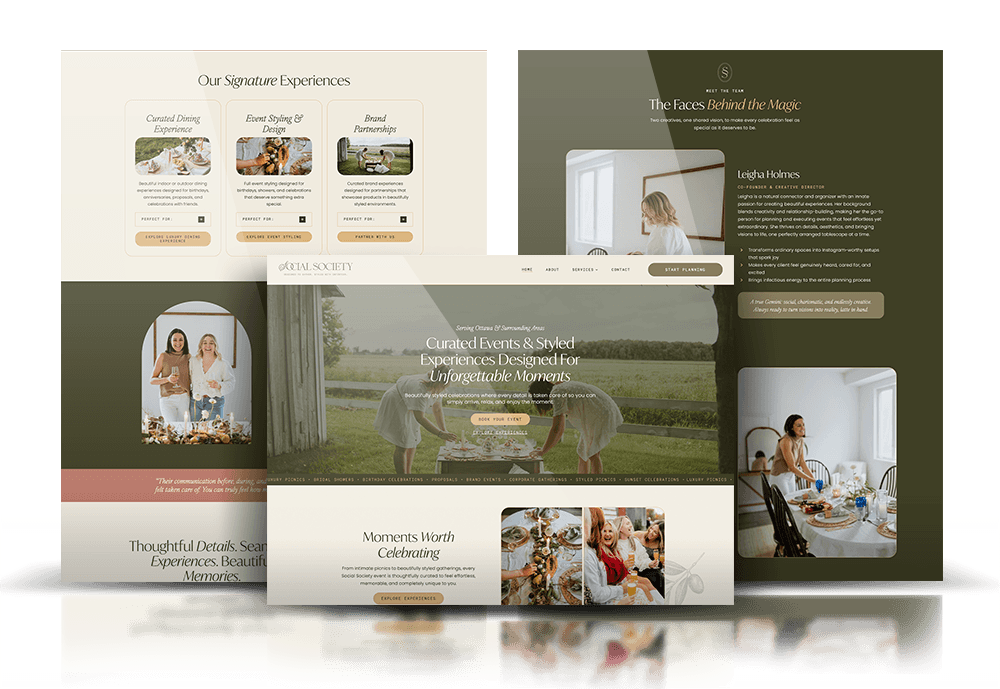
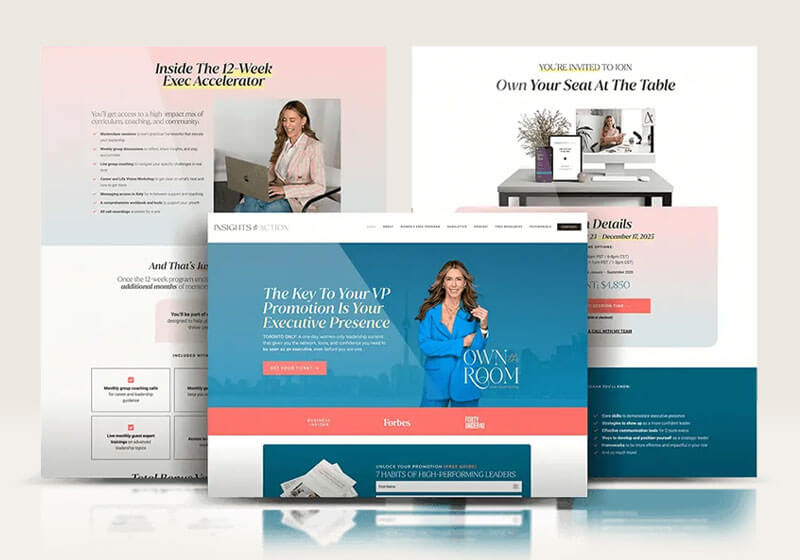
The single most useful thing you can look at before hiring a website designer is their portfolio, not for the aesthetics, but for the type of businesses they’ve built for.
A designer who has built websites for coaches, therapists, consultants, and service-based businesses understands how trust-based businesses work online. They know that the goal isn’t just a beautiful page, it’s a page that makes a potential client feel understood enough to reach out.
A designer who has primarily built e-commerce stores or tech startups is working from a completely different framework. The same design principles don’t apply.
When you look at a designer’s portfolio, ask yourself: do any of these businesses feel like mine? Do these websites make me want to reach out to the business? Can I see myself as one of their clients?
If the answer is yes, that’s a meaningful signal.
2. Strategy before design
The most common complaint from people who’ve had a bad website experience is some version of: “They built exactly what I asked for and it still didn’t work.”
A designer who starts with your goals, your audience, and your business before they start talking about fonts and colours is a fundamentally different experience from one who jumps straight to design.
Ask any potential designer: “What does your discovery or strategy process look like?” If the answer is a questionnaire and a mood board, that’s a design process. If the answer includes a conversation about who you’re trying to reach, what you want them to do, and what’s been working or not working – that’s a strategy-first process.
The second type of designer is who you want.
3. One point of contact from start to finish
Large agencies often pass your project between a sales team, a project manager, a designer, and a developer. By the time your site launches, you may have worked with four different people – none of whom knew your business as well as the person you initially spoke to.
For service-based businesses especially, the best results usually come from working directly with the person who is actually building your site. They understand the context, they retain the decisions made early in the process, and they’re accountable for the final outcome in a way that a team isn’t.
Ask directly: “Who will I be working with throughout the project? Will the person I speak with in our first call be the same person building my website?”
4. Visible pricing or a clear conversation about budget
A designer who won’t give you any sense of pricing until you’ve had three calls and signed an NDA is making the process harder than it needs to be.
You don’t need an exact quote upfront – project pricing is always dependent on scope. But a designer should be able to give you a starting range or a clear framework for how pricing works.
This transparency matters for two reasons: it respects your time by filtering out projects that genuinely aren’t the right fit, and it signals how the designer will handle communication throughout the project. If they’re clear and straightforward about pricing, they’re usually clear and straightforward about everything else.
5. Training so you can manage your own site after launch
Your website is a living thing. You’ll need to update your services, add blog posts, change your photos, and adjust your copy as your business evolves. A designer who builds you a website and disappears – or who charges you for every small edit – is a dependency you don’t need.
Ask: “What does post-launch support look like? Will you train me to manage my own website?”
The answer should include some version of yes. Personalized training – ideally a recorded walkthrough of your specific site – means you can make updates confidently without needing to call someone every time something changes.
6. SEO built in from the start – not added as an afterthought
A beautifully designed website that nobody can find is a beautifully designed problem.
SEO, search engine optimization, is how your website gets found on Google when someone searches for what you do. It’s not a separate service you add on after your site is built. It’s a structural decision that affects how your pages are organized, how your content is written, and how your site is coded.
Ask any potential designer: “How do you approach SEO during the build?” If the answer is “we can add an SEO plugin” – that’s a red flag. If the answer includes keyword research, page structure, meta descriptions, schema markup, and fast loading speeds – that’s a designer who builds sites that get found.
Red flags to watch for when hiring a website designer

Knowing what to look for is helpful. Knowing what to avoid is just as important.
- No portfolio or a portfolio that’s all the same type of site. Range matters. If every site looks identical it means they’re working from templates, not strategy.
- Vague timelines. “It usually takes a few months” is not a timeline. A professional designer should be able to give you a realistic project timeline with milestones.
- They own your website. Some designers retain ownership of your domain, hosting, or the website files themselves. You should own everything outright after launch. Ask this directly before signing anything.
- No contract. Any professional designer should have a clear contract that covers scope, timeline, payment schedule, and ownership. No contract means no protection for either party.
- They design first and ask questions later. If a designer is sending you mockups before they understand your business, your audience, and your goals – those mockups are guesses.
- Slow communication. How quickly a designer responds to your initial inquiry tells you everything about how they’ll communicate during the project. If it takes a week to get a reply to an inquiry email, expect that throughout.
The questions to ask before you hire
Here are the specific questions worth asking any designer you’re seriously considering:
A good designer will answer all of these confidently and clearly. Hesitation or vagueness on any of them is worth paying attention to.
Does location actually matter for SEO?
This is worth addressing because it’s a question a lot of business owners have.
If you want to rank locally – if you want to show up when someone in your city searches for your type of business, your designer should understand local SEO. That means optimizing your Google Business Profile, including location-specific keywords in your content, building pages that speak to local searches, and structuring your site to signal local relevance to Google.
A designer doesn’t need to be based in your city to do this well. They just need to understand local SEO strategy and apply it to your build.
What matters is that you ask about it. “Do you include local SEO in your build process?” is a straightforward question with a straightforward answer.
What working with a website designer should actually feel like
The best website projects feel like a collaboration between someone who knows your business and someone who knows how to build for the web. You bring the expertise in what you do. Your designer brings the expertise in how to communicate that online.
You should feel heard in the strategy conversation, informed throughout the build, and confident at launch. You should receive a website you’re proud to send people to, and the training to manage it yourself going forward.
If any part of that process feels confusing, pressured, or unclear, that’s worth paying attention to before you sign anything.
Working with The Cultivators

I’m Brittany Levesque, the founder of The Cultivators, a website design studio based in South Mountain, Ontario, working with service-based businesses across Canada.
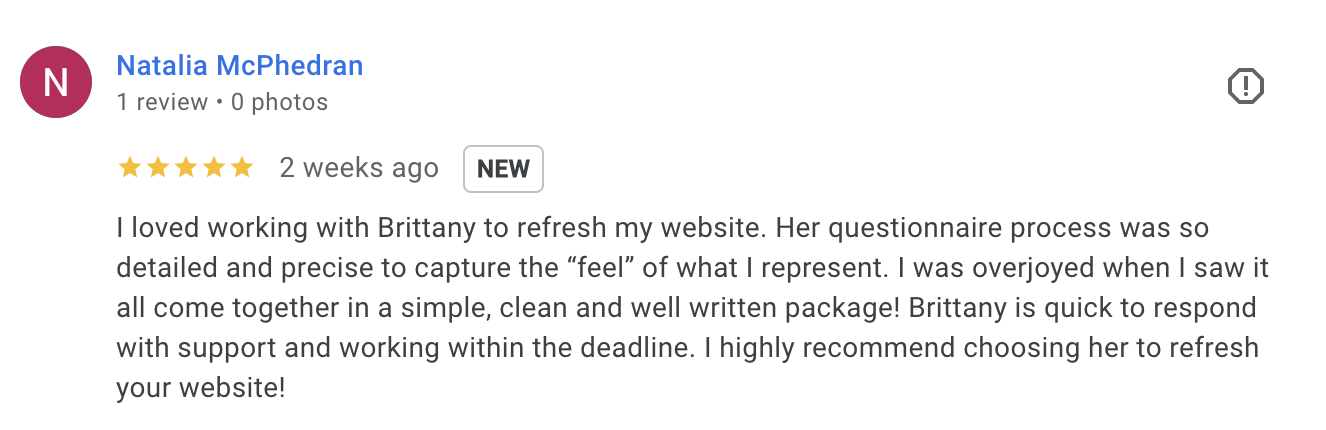
Every project is handled by me personally, start to finish. No handoffs. No account managers. Just a direct working relationship with the person who is actually building your site.
I work with coaches, therapists, consultants, wellness practitioners, and service-based entrepreneurs who are ready for a website that reflects the level of their work and brings in the right clients consistently.
Projects start at $3,600 CAD. Every build includes strategy before design, SEO structure, mobile-responsive development, and personalized post-launch training.
The clarity call is free and takes 30 minutes. There’s no commitment, it’s just a conversation to see if we’re the right fit. Book a Free Clarity Call