

What If? Psychology is an Ottawa psychology practice specializing in psychological and psychoeducational assessments for children and teens.
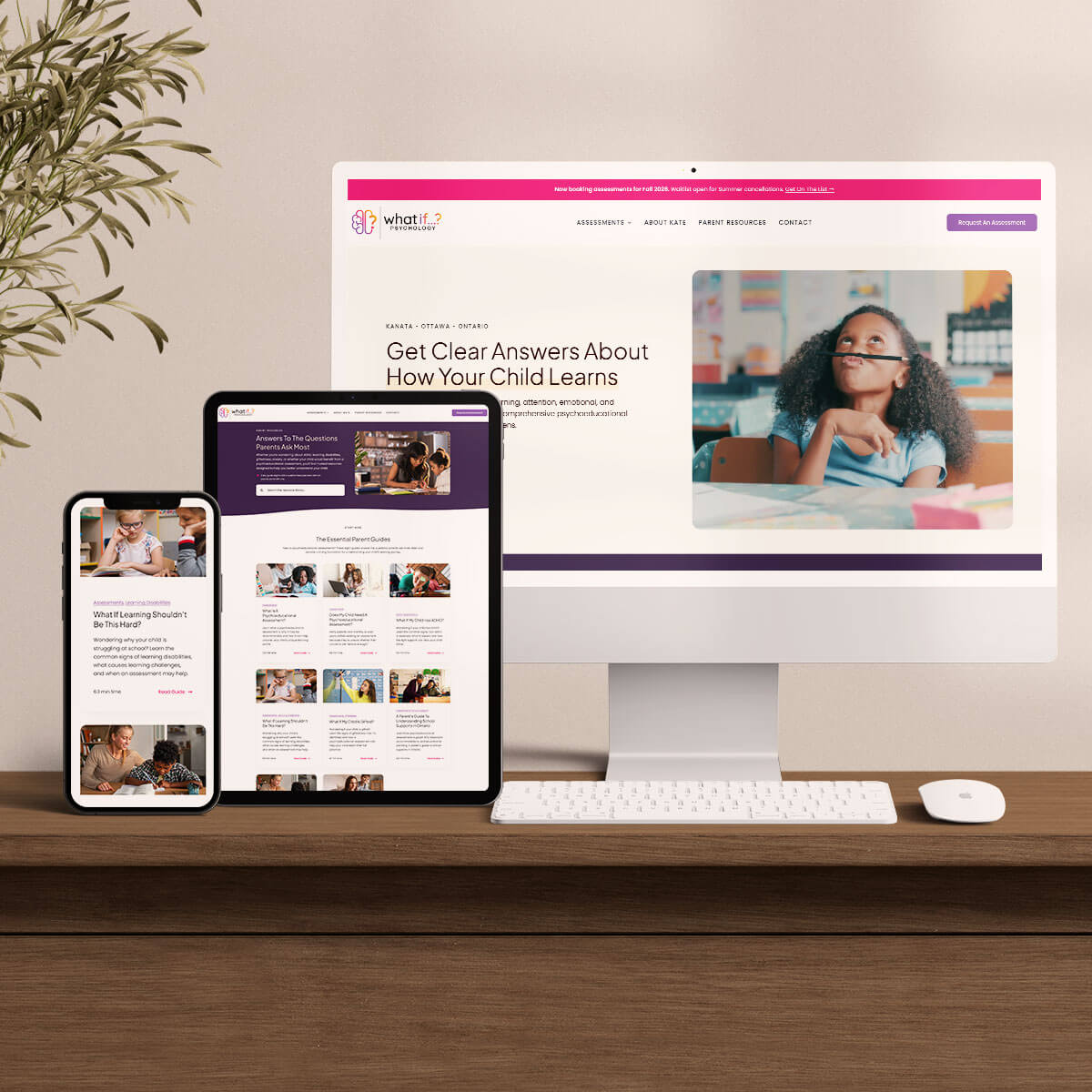
What If? Psychology is an Ottawa psychology practice specializing in psychological and psychoeducational assessments for children and teens. I worked with psychologist Dr. Kate Davidson to redesign the practice’s WordPress website, improve the experience for parents, simplify complex information and build a stronger foundation for SEO.
When parents arrive on a psychology website, they’re rarely just browsing.
They may be wondering why their child is struggling at school. Whether the signs they’re noticing could point to ADHD or a learning disability. Whether their child might be gifted. Whether an assessment would help. Or even what kind of assessment they should be looking for in the first place.
There are usually a lot of questions before someone is ready to reach out.
That became an important part of the strategy behind the What If? Psychology website redesign.
The goal wasn’t simply to give the practice a more modern website.
We wanted to create an experience that felt warm and approachable, made a complex service easier to understand, and helped parents move from wondering “What if?” toward knowing what to do next.
Project Overview
Client: What If? Psychology
Live Website: View What If? Psychology →
Industry: Child Psychology
Location: Ottawa, Ontario
Psychologist: Dr. Kate Davidson
Primary Audience: Parents of children and teens
Services: Website Strategy, Custom Website Design, WordPress Development, UX, Mobile Responsive Design and SEO
Platform: WordPress + Avada
The Goal: Create a warmer, easier-to-navigate psychology website that helps parents understand their child’s assessment options, find helpful information and feel confident taking the next step.
What Wasn’t Working With the Previous Psychology Website?
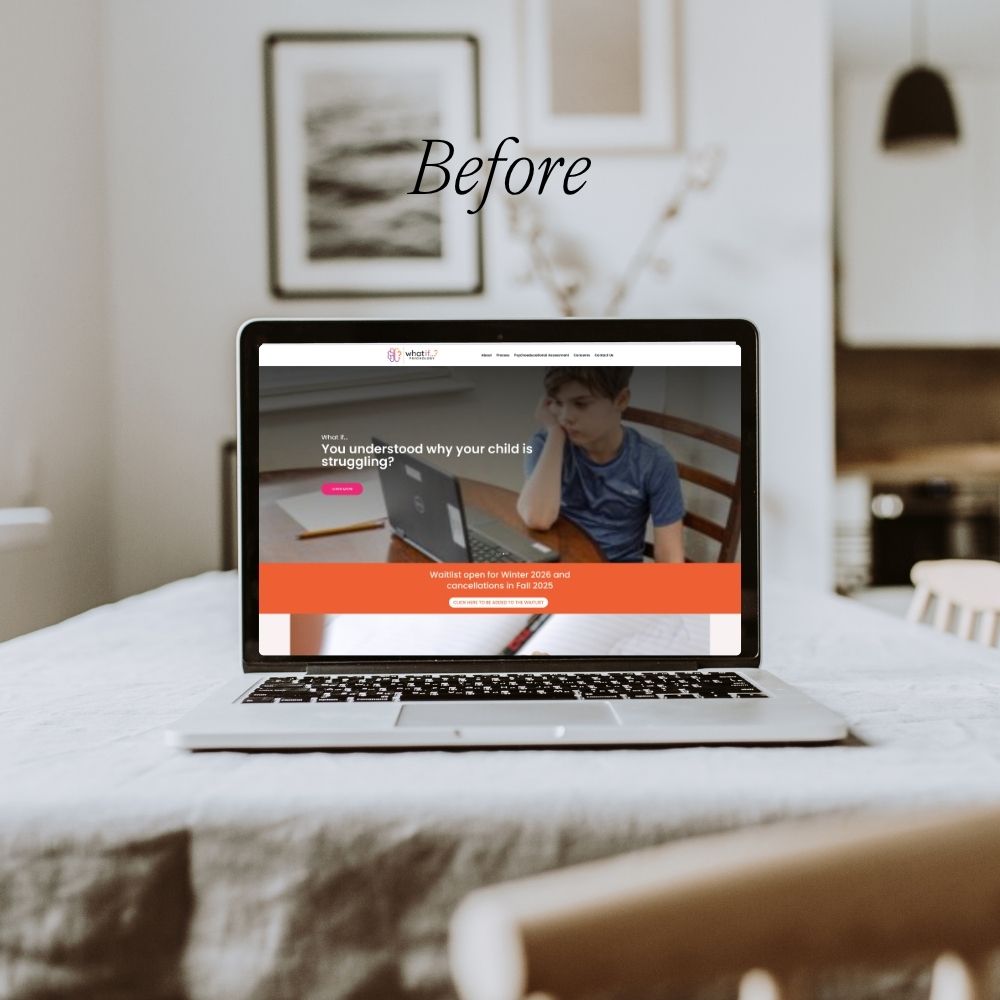
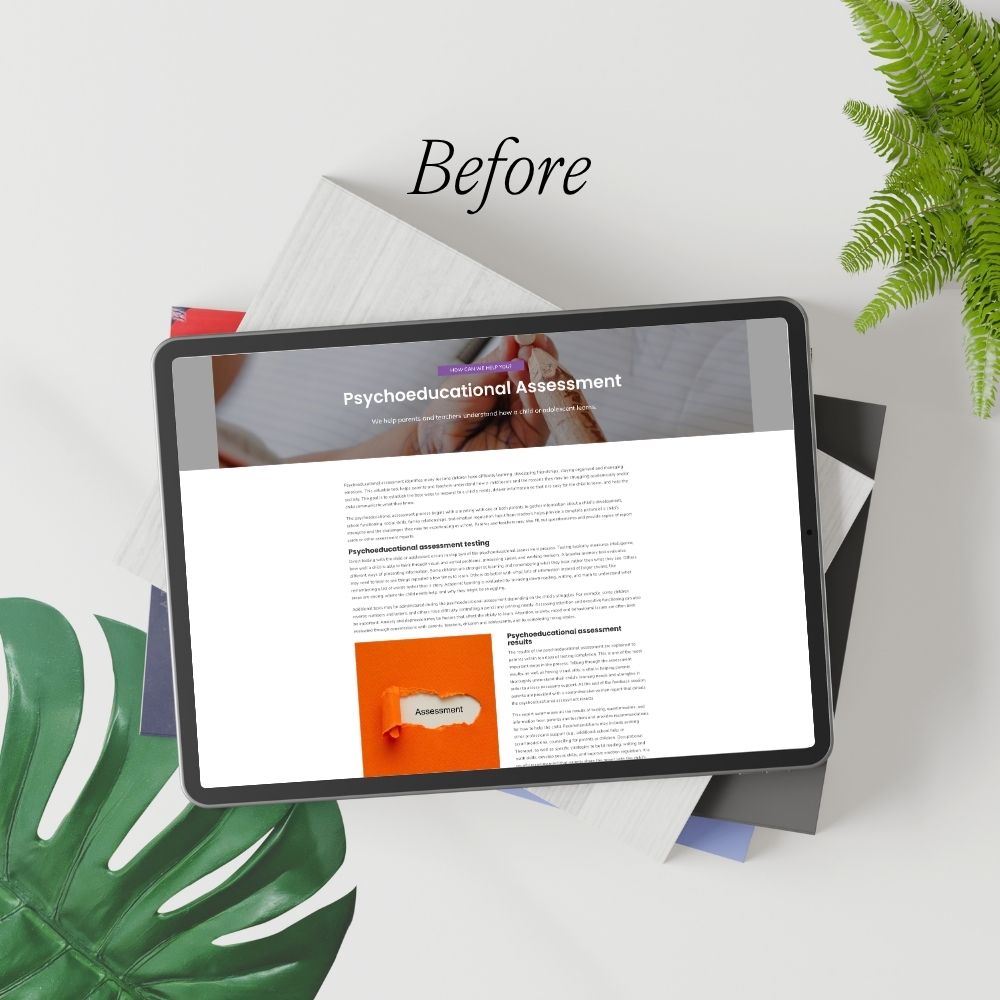
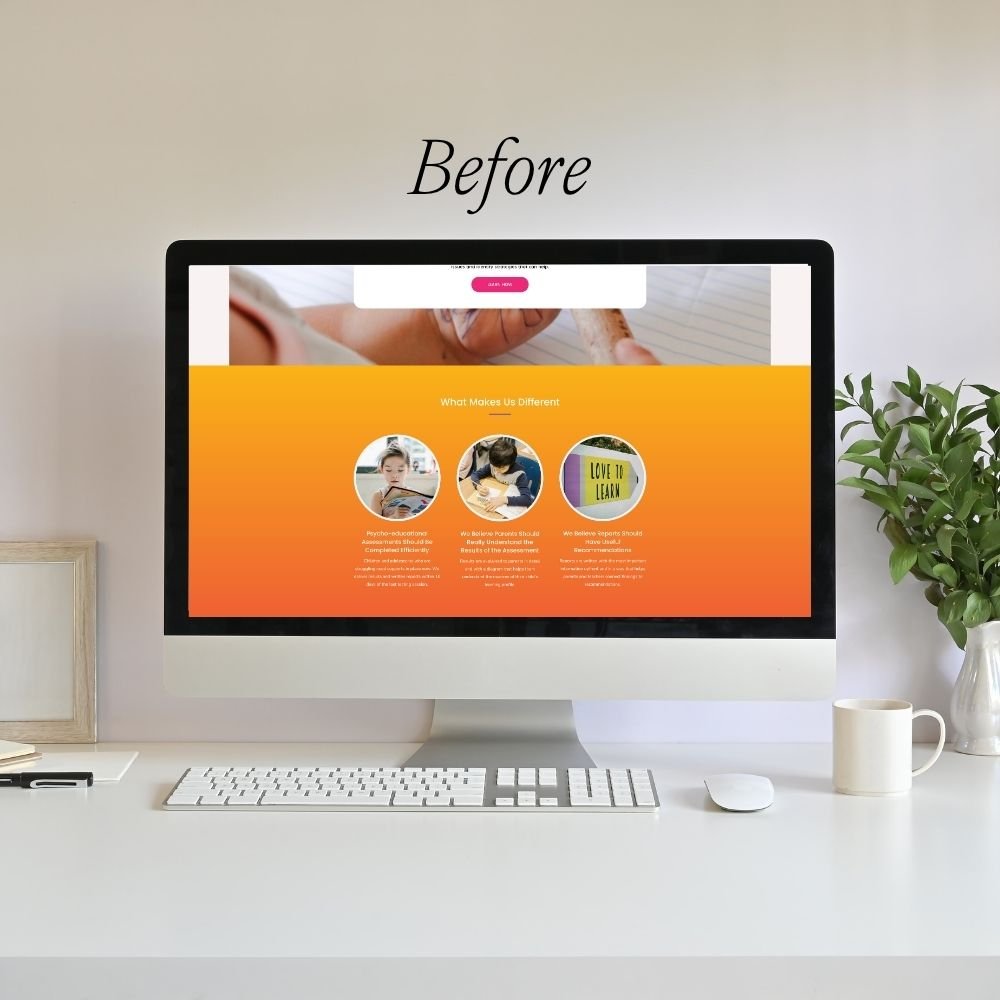
The previous What If? Psychology website contained plenty of valuable information and had an established brand behind it, but the website had grown over time and was ready for a more strategic approach.
There were opportunities to simplify the content, establish a clearer visual hierarchy, make the assessment options easier to understand and bring more of Kate’s personality and approach into the website.
Most importantly, we needed to rethink the experience from the perspective of the parent visiting it.
Someone arriving on the website may not know the difference between a psychoeducational assessment and another type of psychological assessment.
They may not know what service to choose.
They may only know that something doesn’t feel quite right.
The new website needed to meet them there.
Starting With the Questions Parents Are Already Asking
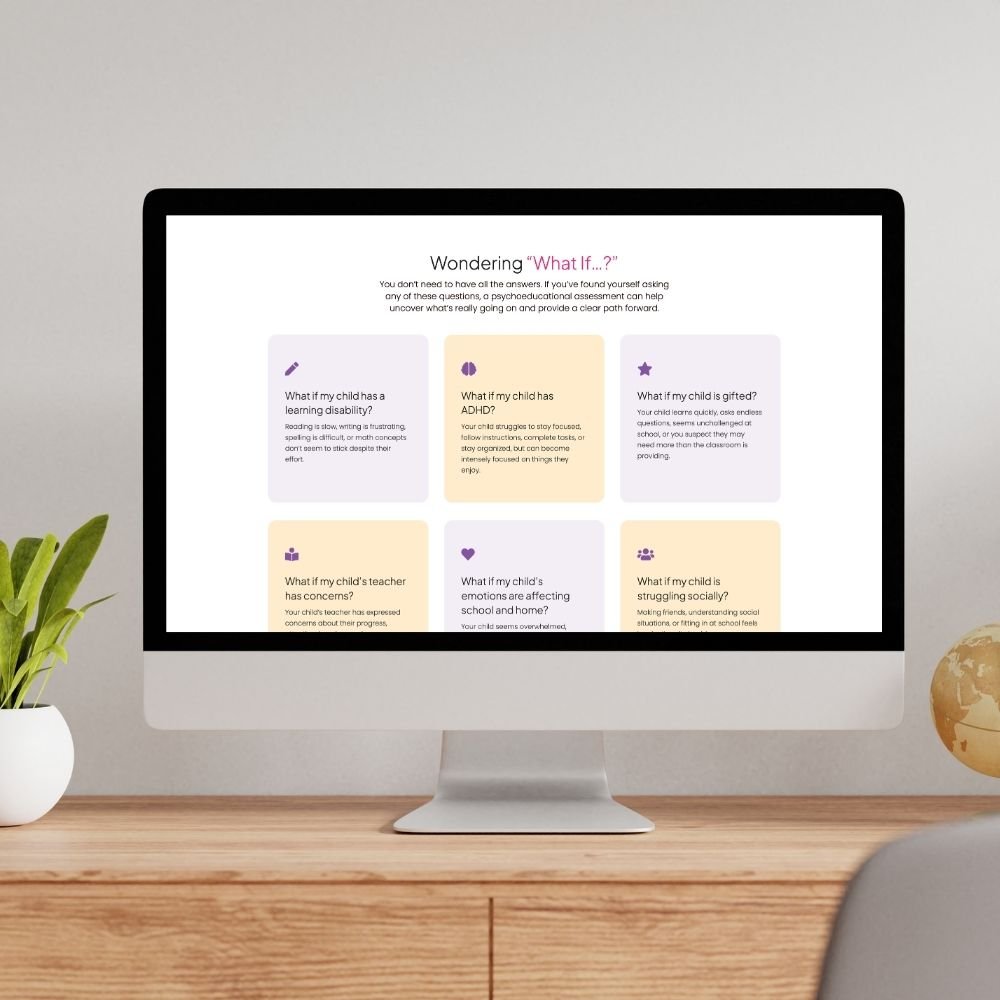
One of the things I loved about this project was that the name What If? Psychology gave us a natural foundation for the entire website experience.
Because parents arrive with a lot of “what if?” questions.
What if my child has ADHD?
What if they’re gifted?
What if learning shouldn’t be this hard?
What if there’s something we’re missing?
Rather than structuring the website entirely around clinical terminology, we incorporated those real parent questions into the messaging and user journey.
It’s a subtle shift, but an important one.
Instead of expecting parents to understand professional terminology before arriving on the website, we could start with what they’re already experiencing and help guide them toward the information they need.
It also gave us an opportunity to make the What If? Psychology brand much more memorable throughout the website.
How Do You Make Psychological Assessments Easier for Parents to Understand?
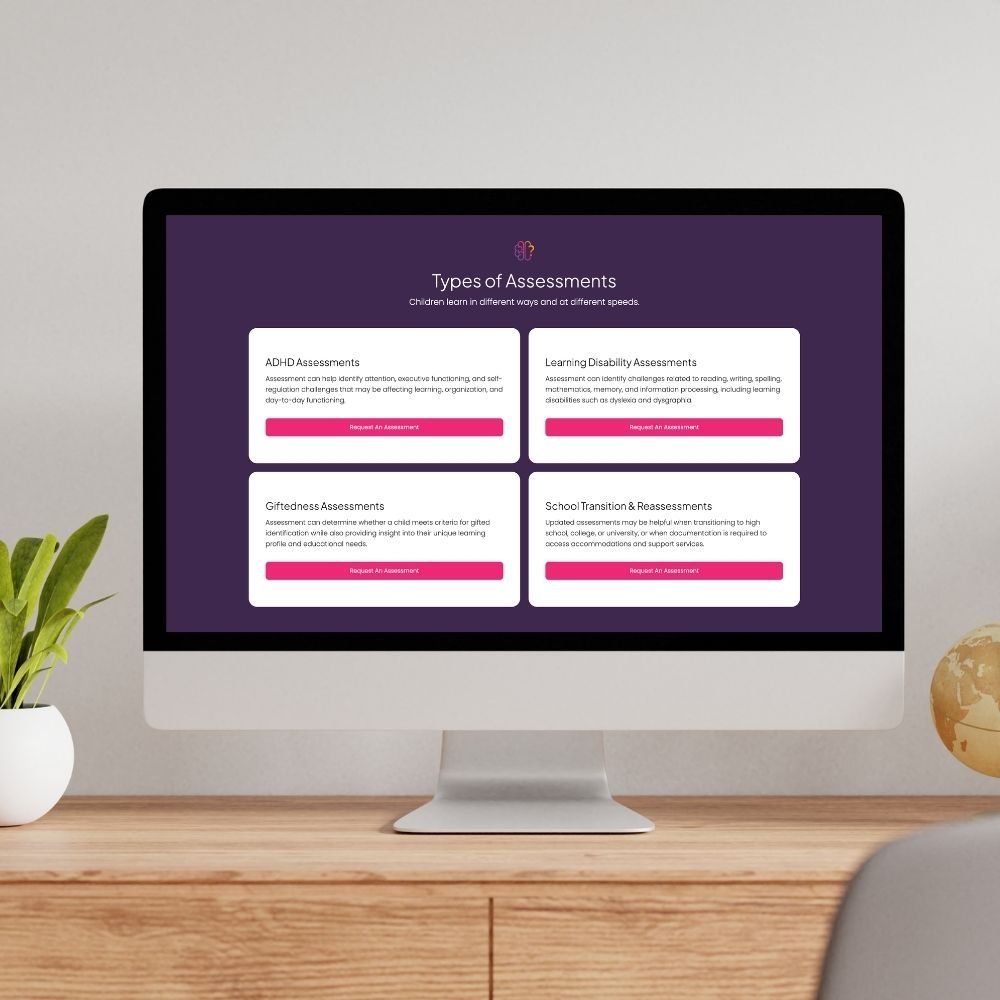
Psychological and psychoeducational assessments can involve a lot of information.
Different types of assessments. Testing. Interviews. Reports. Diagnoses. Recommendations. School accommodations.
For a parent going through the process for the first time, it can quickly become overwhelming.
One of the biggest priorities for the website redesign was therefore information hierarchy.
We reorganized the content so parents can understand the big picture first and explore more detailed information when they’re ready.
Rather than expecting someone to already know exactly which assessment their child needs, the website helps them understand their concerns, explore the different assessment options and learn what the process involves.
The journey became much clearer:
What might be going on → What an assessment can help uncover → What the process looks like → What happens next
The website still provides the detailed information families need, but they don’t have to work nearly as hard to find or understand it.
Designing a Psychology Website That Builds Trust
Experience and qualifications matter enormously when choosing a psychologist.
Kate brings more than 20 years of experience working with children, teens and families, and communicating that expertise was an important part of the website.
But credentials aren’t the only thing a parent is wondering about.
There’s another question that can be just as important:
Will my child feel comfortable with this person?
That became an important part of the redesign.
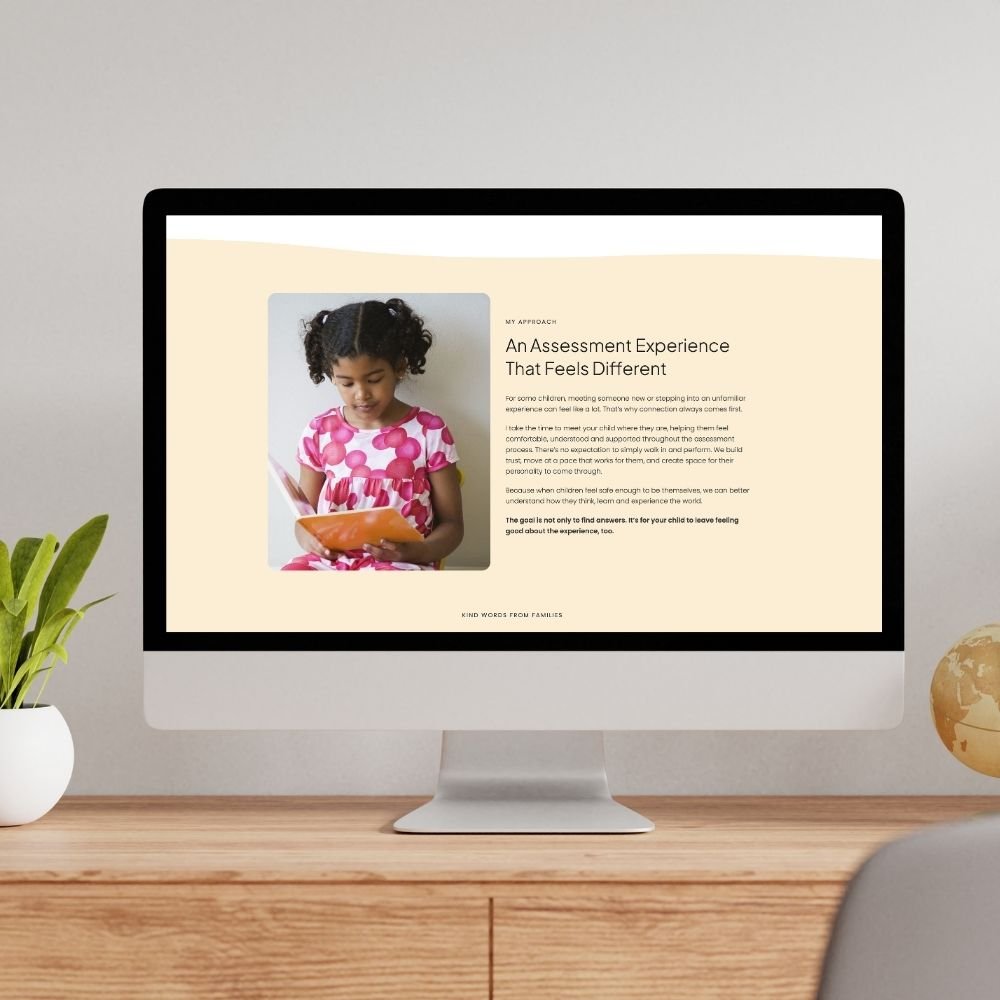
Rather than repeatedly listing the same credentials and practice benefits, we created space to communicate what the assessment experience itself can feel like.
Warm.
Patient.
Calm.
Child-centred.
The messaging, photography and feedback from families work together to help parents understand not only Kate’s professional experience, but also the person their child will actually be spending time with.
When you’re designing a website for a psychologist, therapist or other helping professional, I think that distinction matters.
Expertise helps establish credibility.
The experience of working with someone helps establish trust.
Why We Created a Parent Resource Library
Another major part of the What If? Psychology website redesign was expanding the site beyond its core service pages.
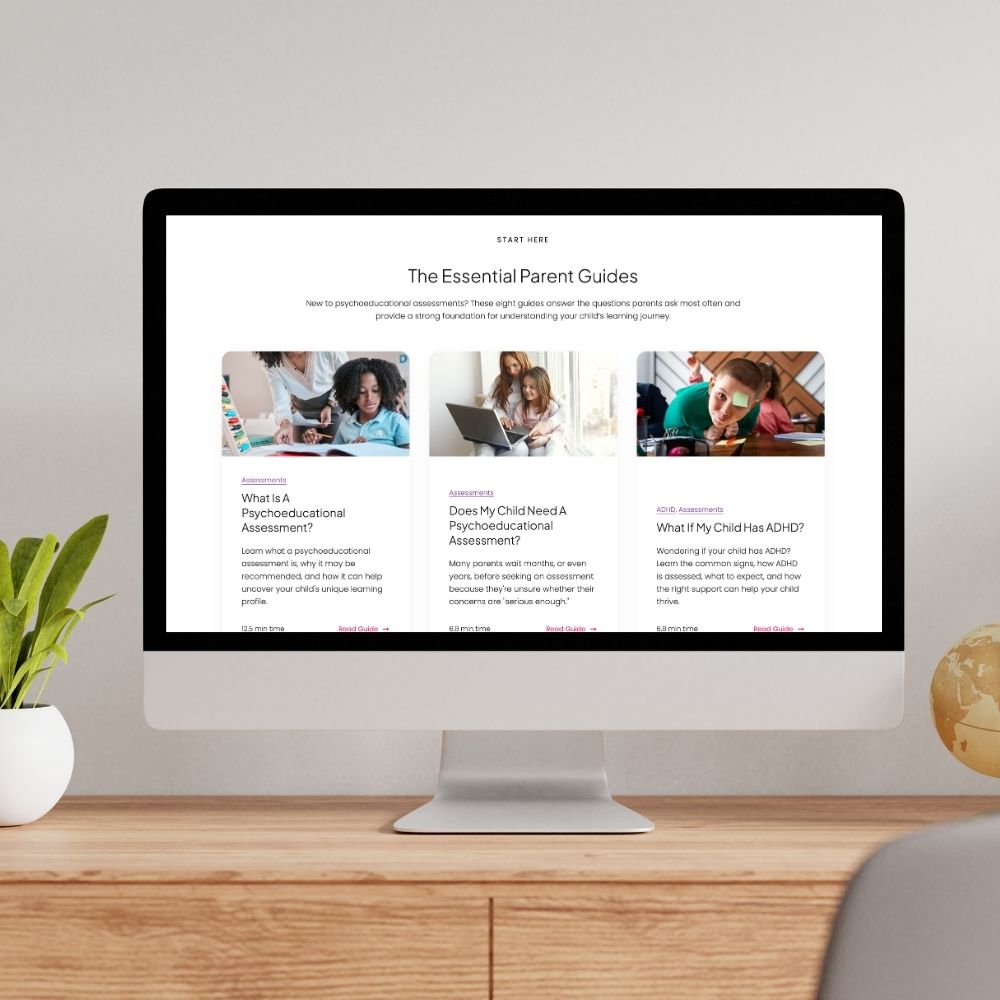
We created a dedicated Parent Resources library with practical guides based on questions families commonly have before, during and after a psychological assessment.
The initial resource library includes guides about:
- Psychoeducational assessments
- How to know when a child may need an assessment
- ADHD
- Learning disabilities
- Giftedness
- School supports in Ontario
- Preparing a child for an assessment
- Understanding assessment results and what happens next
This wasn’t simply about adding more content to the website.
It was a strategic decision for both the parent experience and long-term search visibility.
A parent may not begin their search by typing “child psychologist Ottawa” into Google.
They may begin with a question.
“How do I know if my child has a learning disability?”
“Could my child have ADHD?”
“What happens during a psychoeducational assessment?”
“How do I prepare my child for an assessment?”
Creating useful resources gives What If? Psychology the opportunity to meet families much earlier in that journey.
Instead of only being found when someone is ready to book an assessment, Kate can become a trusted source of information while parents are still trying to understand what might be happening.
How We Approached SEO for What If? Psychology
Search engine optimization wasn’t something we added after the website was finished.
It influenced how the website itself was structured.
Rather than optimizing every page for the same handful of keywords, the core pages and parent guides were given distinct search purposes.
The primary website pages focus on searches related to psychoeducational assessments, psychological assessments and child psychology services in Ottawa, while the individual guides answer more specific informational searches around ADHD, learning disabilities, giftedness, school supports and the assessment process.
We also incorporated geographic context around the broader area What If? Psychology already serves, including families travelling from Ottawa and communities throughout Eastern Ontario.
This creates a connected ecosystem of content.
A parent might discover What If? Psychology through an educational guide, learn more about their child’s concerns, explore the assessment options and eventually move toward contacting the practice.
Each page has a purpose, rather than multiple pages competing to rank for exactly the same search.
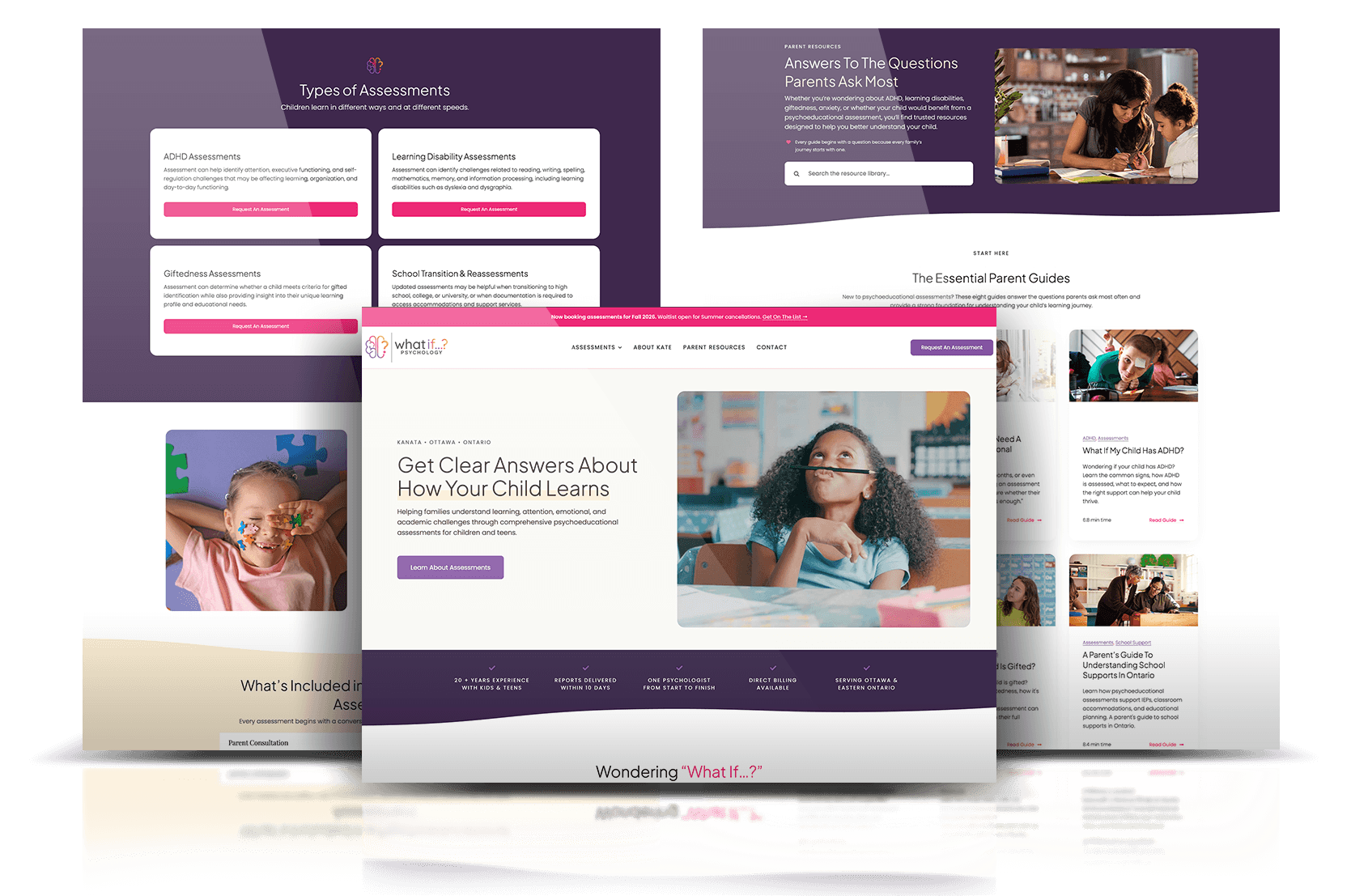
What Changed in the What If? Psychology Website Redesign?
The finished website wasn’t simply a visual refresh.
The redesign included:
- A completely redesigned visual experience
- Simplified website navigation
- A clearer content hierarchy
- Parent-focused messaging based on real questions families ask
- Clearer explanations of psychological and psychoeducational assessments
- More intentional pathways between services and supporting information
- A dedicated Parent Resources library
- Individual SEO strategies for core pages and educational guides
- Stronger Ottawa and Eastern Ontario geographic signals
- More prominent trust signals and information about Kate’s experience
- A fully responsive WordPress website
- Clear pathways from educational resources to assessment services and inquiries
The visual transformation is significant, but the bigger change is how intentionally the website now works for the people using it.
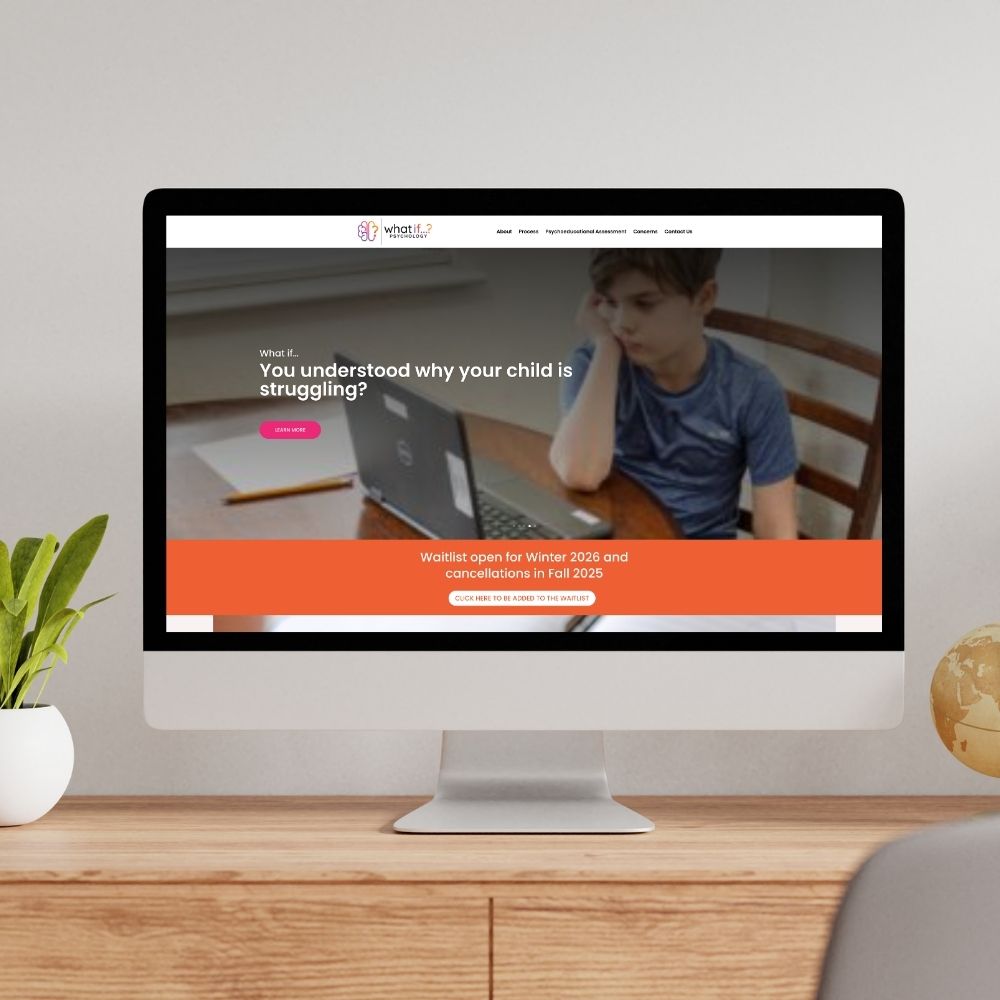
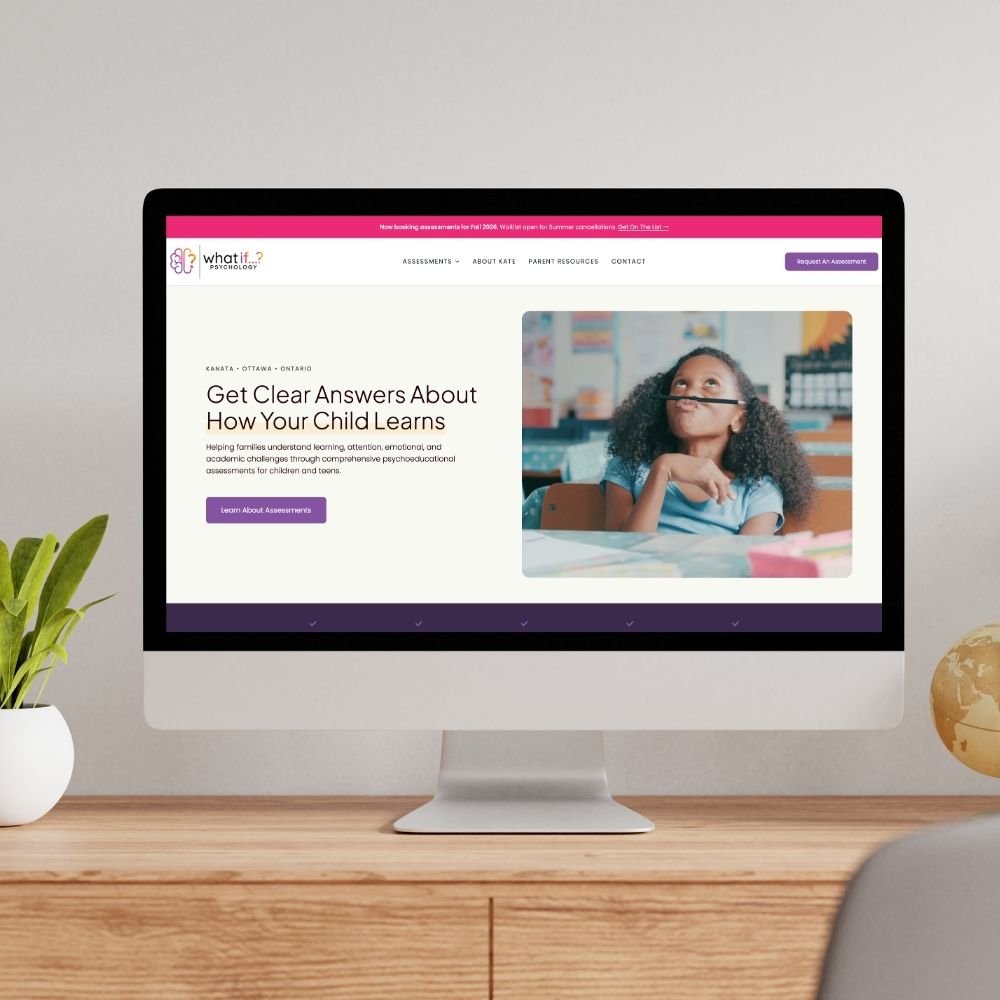
The Website Before & After
This is where the transformation really comes together.
The previous website had valuable information, but the redesign gave that information a much clearer structure and purpose.
The new website leads with the questions families are already asking, makes psychological assessment options easier to understand, gives Kate’s personality and approach a stronger presence, and creates a more intentional path from uncertainty to answers.
What Happened After Launch?
The real test of a website comes after it goes live.
Within the first several weeks of launching the new What If…? Psychology website, we began seeing encouraging signs in both website traffic and, more importantly, actual assessment inquiries.
By September 25, the website had welcomed 253 users, with organic Google search generating 178 sessions.
The pages we had strategically built around What If…? Psychology’s core services were also attracting the most attention. The Psychoeducational Assessments page had received 247 views, while the Child Psychological Assessments page had received 123 views.
And search visibility wasn’t limited to Google.
The website had already begun receiving referral traffic from AI-powered platforms, including 12 sessions from ChatGPT, along with additional traffic from Microsoft Copilot.
But the most meaningful result wasn’t sitting inside Google Analytics.
It was happening in Kate’s inbox.
Kate had intentionally planned a vacation during what had historically been a slower season for assessment requests. Shortly after launch, she told me:
“I’ve noticed a huge jump in inquiries.”
She initially received four assessment requests within just a few days.
And the requests kept coming.
A few weeks later, I heard from her again:
“The requests keep coming in and March is starting to book up. This is wild!”
Within weeks of launching, a period Kate had expected to be relatively quiet had instead resulted in the practice booking assessments months into the future.
While website traffic and inquiries can be influenced by many factors, seeing growing organic search visibility alongside such a significant increase in inquiries so soon after launch was an incredibly encouraging result.
Kate summed it up best:
“The result has truly been amazing.”
Early results: August 9–September 25, 2026
From a historically slow season to booking assessments months ahead.
A Website That Feels Like What If? Psychology
One of my favourite outcomes of this project is that the finished website doesn’t feel like it could belong to just any psychology practice.
It feels like What If? Psychology.
The questions woven throughout the messaging.
The warmth of the photography.
The playful details.
The resources designed around real parent concerns.
The balance between professionalism and personality.
And underneath all of that is a very intentional strategy designed around the families actually using the website.
The finished website is professional without feeling clinical.
Informative without being overwhelming.
Warm without sacrificing credibility.
And most importantly, it gives parents somewhere to start when they don’t quite know what they’re looking for yet.
Because sometimes finding an answer starts with being able to ask:
What if?
Frequently Asked Questions About Psychology Website Design
What should a psychologist’s website include?
A psychologist’s website should clearly communicate who they help, the services they provide, what clients can expect from the process, the psychologist’s experience and credentials, and how to take the next step.
For practices working with children and teens, it’s also important to remember that the primary website visitor is often the parent. The content and navigation should help answer their questions without requiring them to already understand psychological terminology.
How can a psychology website build trust with parents?
Professional credentials are important, but parents also want to understand what working with the psychologist will feel like for their child.
Clear and approachable language, authentic photography, thoughtful design, explanations of the assessment process and appropriate social proof can help a psychology website communicate both professional credibility and the human experience behind the practice.
Is SEO important for psychologists?
SEO can help psychology practices appear when families search for specific assessment services as well as questions about their child’s learning, attention or development.
For What If? Psychology, the SEO strategy combines locally focused service pages targeting Ottawa and Eastern Ontario with educational resources answering broader questions about psychoeducational assessments, ADHD, learning disabilities, giftedness and school supports.
Why create educational resources on a psychology website?
Educational resources allow a psychology practice to answer questions families may be searching for before they’re ready to contact a psychologist.
They can also support long-term organic search visibility by creating useful content around specific topics that connect naturally to the practice’s services and expertise.
Why use WordPress for a psychology practice website?
WordPress provides flexibility for a psychology practice that wants to combine service information, educational resources, SEO and future content growth within one website.
What If? Psychology was custom designed and developed in WordPress using Avada, giving the practice an easy-to-manage website that can continue to evolve as new resources and information are added.

Looking for a Website That Does More Than Look Good?
If your current website no longer reflects the quality of your business, or you’re struggling to turn everything you do into a clear online experience, I can help.
I design strategic, custom WordPress websites for service-based businesses that need to look great, communicate clearly and make it easier for the right people to take the next step.
Browse The Post